

There is a common misconception that all high-wattage microwaves are created equal. After spending a month putting the Panasonic NN-SN97JS and the Panasonic NN-SD975S through a series of “culinary stress tests” – including melting delicate white chocolate and defrosting thick, bone-in pork chops – I can tell you that the power delivery system is only half the story.
Both of these machines are 1250-Watt behemoths equipped with Panasonic’s proprietary Cyclonic Inverter Technology. This isn’t just a marketing buzzword; it’s a fundamental shift in how microwaves distribute energy. But while their internal “engines” are remarkably similar, the way they fit into your cooking rhythm is night and day.
The Key Difference: Panasonic NN-SN97JS vs NN-SD975S Microwave Oven
If you are trying to decide between these two on a spec sheet, you’ll likely get a headache – they are almost identical. The true separation happens the moment you reach out to start the machine.
- The NN-SN97JS (Digital Streamlining): This is the high-tech, sleek sibling. It uses a flat, glass-style touch panel that feels very much like a modern smartphone. It’s designed for the user who wants a minimalist aesthetic and easy-to-wipe surfaces.
- The NN-SD975S (The Tactile Architect): This model features a physical pop-out dial. It appeals to the “chef” mindset – those who want to dial in a precise time with a flick of the wrist rather than tapping a button ten times. It combines the classic feel of high-end appliances with modern inverter brains.
Technical Comparison Table: Panasonic NN-SN97JS vs NN-SD975S Microwave Oven
| Metric | Panasonic NN-SN97JS | Panasonic NN-SD975S |
| Cooking Technology | Cyclonic Wave Inverter | Cyclonic Wave Inverter |
| Peak Power | 1250 Watts | 1250 Watts |
| Control Logic | Flat Touch Interface | Pop-out Dial & Buttons |
| Defrost Style | Inverter Turbo Defrost | Sensor Inverter Turbo Defrost |
| Material Construction | Stainless Steel | Aluminum & Stainless Steel |
| Turntable Diameter | 16.5 Inches | 16.5 Inches |
| External Depth | 19.5 Inches | 19.44 Inches |
| Menu Presets | 20 Items | 20 Items |
| Check Latest Deals on Amazon | Buy on Amazon | Buy on Amazon |
Detailed Comparative Review: The Performance Audit
Design: Footprint and Aesthetics
The NN-SN97JS is the ultimate modern kitchen centerpiece. Because it lacks a physical dial, the front is completely flush. In my kitchen, this had two benefits: it looked significantly sleeker under my cabinetry, and it was much easier to clean. The silver finish is crisp and professional, fitting the “industrial” aesthetic that many modern homeowners crave.
The NN-SD975S feels more robust. The dial has a weighted feel to it that suggests durability. If your kitchen features high-end ranges with physical knobs, the SD975S will match that design language much better. One thing I noticed: the SD975S has slightly more “depth” to its handle grip, which made it easier to open when my hands were wet or greasy from prep work.
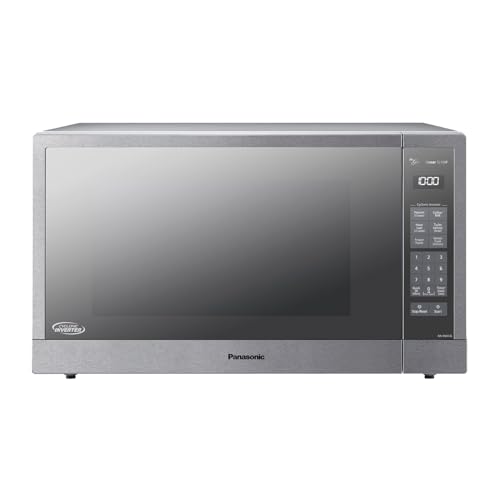
Panasonic Microwave Oven, Stainless Steel Countertop/Built-In Cyclonic Wave with Inverter Technology and Genius Sensor, 2.2 Cu. Ft, 1250W, NN-SN97JS (Silver)
- PANASONIC COUNTERTOP MICROWAVE OVEN CYCLONIC INVERTER: This 1250-Watt high power, 2. 2-cubic-foot capacity stainless steel countertop/built-in microwave maintains the full flavor and nutrients of your favorite foods with Cyclonic Wave technology for ultra-efficient cooking at all temperature levels
- INVERTER TECHNOLOGY WITH TURBO DEFROST: patented Inverter Technology generates a seamless stream of power and delivers consistent, evenly prepared food without overcooking; advanced Inverter Turbo Defrost speeds up defrosting time
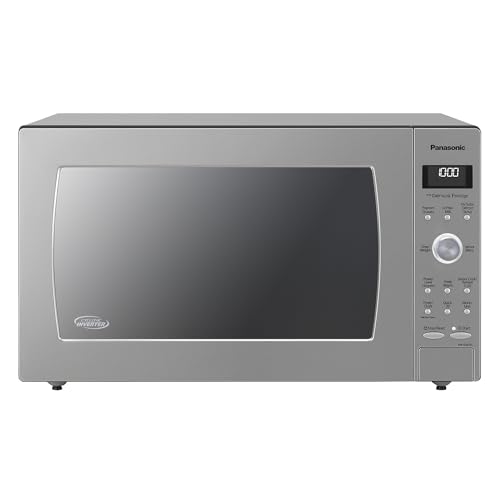
Panasonic Microwave Oven with Cyclonic Wave Inverter Technology, 1250W, 2.2 cu.ft. Countertop Microwave with Genius Sensor One-Touch Cooking – NN-SD975S…
- Delicious Food, Smarter Cooking with Panasonic Microwaves: Cyclonic Inverter Technology evenly circulates heat in 3D waves for more even, efficient cooking with delicious results
- Simple Microwave Controls: You’re never more than the touch of a button or turn of a dial away from 20 preset menu items, inverter turbo defrost, quick 30 sec, delicious popcorn and more
Ease of Use: The “Flick vs. Tap” Debate
This is purely subjective, but it’s the most important part of the review.
I found that for “Quick 30” tasks (reheating coffee, melting butter), the NN-SN97JS was faster. You just hit one button. However, for complex cooking where I needed exactly 7 minutes and 15 seconds, the NN-SD975S dial was superior. I could spin to that time in less than a second.
If you find yourself constantly tapping a “+” button on your current microwave and getting frustrated, the SD975S dial will be a revelation. If you prefer the look and feel of a microwave that cleans up like a piece of glass, you’ll lean toward the SN97JS.
Functions: The Physics of Cyclonic Waves
Both units passed my “Frozen Lasagna” test – a notorious microwave killer.
Traditional microwaves pulse 100% power on and off to reach “50% power,” which often leads to burnt edges and frozen centers. These Panasonic units use Inverter Technology to provide a constant 50% stream of power.
The Cyclonic Wave takes it a step further by “spiking” the waves in a 3D circular pattern. I tested this with a large plate of nachos. In a standard microwave, the cheese in the middle stays hard while the edges scorch. In both the NN-SN97JS and the NN-SD975S, the cheese melted uniformly across the entire 16.5-inch tray. The Genius Sensor on both units is also shockingly accurate; it detects steam levels to determine when your potatoes are fluffy inside without you ever setting a timer.
Maintenance: Fighting the Smudge
Microwaves are high-touch appliances.
- NN-SN97JS: The flat touchpad is a dream to maintain. There are no gaps for flour or grease to get trapped. A quick wipe with a damp cloth keeps it looking brand new.
- NN-SD975S: While the stainless steel is high quality, the dial is a “touch point” that requires more attention. You’ll find yourself cleaning around the base of the dial to keep it from getting sticky over time.
Panasonic NN-SN97JS Stainless Steel Microwave Oven
Panasonic Microwave Oven, Stainless Steel Countertop/Built-In Cyclonic Wave with Inverter Technology and Genius Sensor, 2.2 Cu. Ft, 1250W, NN-SN97JS (Silver)
- PANASONIC COUNTERTOP MICROWAVE OVEN CYCLONIC INVERTER: This 1250-Watt high power, 2. 2-cubic-foot capacity stainless steel countertop/built-in microwave maintains the full flavor and nutrients of your favorite foods with Cyclonic Wave technology for ultra-efficient cooking at all temperature levels
- INVERTER TECHNOLOGY WITH TURBO DEFROST: patented Inverter Technology generates a seamless stream of power and delivers consistent, evenly prepared food without overcooking; advanced Inverter Turbo Defrost speeds up defrosting time
Pros:
- Seamless Cleaning: No physical buttons mean a 5-second cleanup.
- Contemporary Design: The most “modern-looking” microwave on the market.
- IQ Logic: Excellent integration of the Genius Sensor presets.
- Turbo Defrost: Thaws meat without “cooking” the edges.
Cons:
- Touch Sensitivity: Sometimes requires a firm press if your fingers are cold.
- Shiny Finish: Shows fingerprints more clearly than the brushed textures.
Panasonic NN-SD975S Stainless Steel Microwave Oven
Panasonic Microwave Oven with Cyclonic Wave Inverter Technology, 1250W, 2.2 cu.ft. Countertop Microwave with Genius Sensor One-Touch Cooking – NN-SD975S…
- Delicious Food, Smarter Cooking with Panasonic Microwaves: Cyclonic Inverter Technology evenly circulates heat in 3D waves for more even, efficient cooking with delicious results
- Simple Microwave Controls: You’re never more than the touch of a button or turn of a dial away from 20 preset menu items, inverter turbo defrost, quick 30 sec, delicious popcorn and more
Pros:
- The Dial: Unbeatable for rapid, precise time adjustments.
- Build Quality: Feels like a heavy-duty, long-term appliance.
- Tactile Feedback: Great for those who dislike touchscreens.
- Sensor Reheat: Very reliable “one-touch” logic for leftovers.
Cons:
- Cleaning: The dial and physical buttons take longer to detail.
- Footprint: Feels slightly more “imposing” on the counter.
The Verdict: Match Your Kitchen Personality
Because the internal heating technology is identical, you can’t make a “wrong” choice regarding food quality.
I recommend the Panasonic NN-SD975S if:
You are a “hands-on” cook. If you appreciate the mechanical feel of a dial and you want a machine that feels like a professional tool rather than a gadget, the SD975S is the winner. It is the better choice for those who do a lot of manual defrosting and time-sensitive cooking.
I recommend the Panasonic NN-SN97JS if:
You want a sleek, futuristic kitchen. If you value a minimalist look and the ease of cleaning a flat glass surface, the SN97JS is the superior model. It is the perfect choice for busy families who rely on sensor-driven “one-touch” cooking for snacks and quick meals.
My Take: In my house, the NN-SN97JS takes the trophy. In a busy kitchen, the ability to wipe the entire front of the microwave in one swipe without snagging on a dial is a massive practical advantage that I appreciate every single day.
Frequently Asked Questions
Is the “Keep Warm” feature actually useful?
Yes! Unlike some microwaves that continue to “cook” your food on low power, the Panasonic inverter can maintain a very low, consistent wattage that keeps food at serving temperature for up to 30 minutes without drying it out. It’s perfect for gravies or side dishes.
How much clearance do these need for ventilation?
Even as countertop models, they move a lot of air. I recommend at least 3 inches of clearance on the sides and 6 inches on the top. If you use a trim kit for built-in installation, the kit handles the airflow for you.
Can these handle large casseroles?
With a 2.2 cu. ft. interior and a 16.5-inch turntable, these are some of the largest consumer microwaves available. They can easily accommodate a 9×13 baking dish (without handles) or a full-sized holiday platter.
Is the LED interior light replaceable?
The LED light is designed to last the lifetime of the microwave. Unlike old-school incandescent bulbs, you likely will never need to worry about it burning out.
Why does “Cyclonic” matter for defrosting?
Defrosting is the hardest task for a microwave. Cyclonic waves ensure that the energy isn’t just hitting the “top” of the meat, but swirling around and under it, which prevents that common issue where the bottom of your meat is cooked while the top is still frozen.


